

 EN
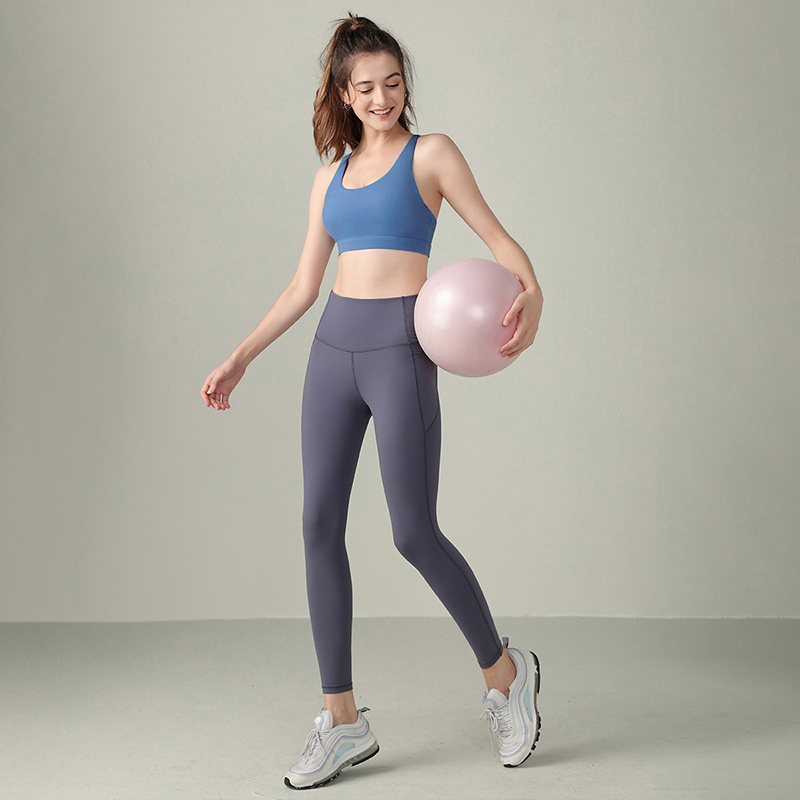
Why Breathability Is the Critical Factor in Sweat Management for Gym Leggings
Sweat accumulation during exercise causes discomfort, fabric cling, and skin irritation—but effective sweat management hinges on the garment’s ability to allow moisture vapor to escape. Breathability is the primary mechanism enabling this vapor transfer, preventing humid microclimates from forming next to the skin. When air flows freely through the fabric, it carries evaporated sweat away, keeping the skin dry and cool. During high-intensity training, the body can produce up to 2 liters of sweat per hour; without rapid vapor evacuation, fabric becomes heavy, restrictive, and thermally inefficient. Non-breathable leggings trap moisture, leading to persistent wetness that increases chafing risk and impairs thermoregulation. In contrast, breathable gym leggings use engineered knit structures—featuring microscopic air channels—that sustain airflow even under stretch. This continuous ventilation disrupts the saturation layer, releasing sweat vapor before it condenses into liquid on the skin. The result? Less clamminess, fewer distractions, and a 5–10% reduction in perceived exertion—a meaningful psychological edge. Ultimately, breathability transforms leggings from passive barriers into active components of the body’s cooling system—making it the most critical factor in sweat management.
The Science Behind Breathable Fabric Structure: Air Permeability and Microclimate Control
The discomfort of sweat-saturated gym leggings isn’t just about wetness—it’s a failure of microclimate control. The body’s performance and comfort depend directly on the fabric’s ability to manage the thin layer of air between skin and garment. When that layer becomes saturated with warm, humid vapor and cannot exchange with ambient air, natural thermoregulation breaks down—leading to overheating and the familiar clammy sensation. This is where textile architecture meets physiology: the deliberate design of a fabric’s physical structure creates a dynamic system for regulating airflow and vapor transport, fundamentally reshaping the exercise experience.
How engineered knit architecture regulates skin surface temperature and humidity
Engineered knit architecture is the cornerstone of breathable microclimate control in gym leggings. Unlike rigid woven fabrics, knits offer inherent extensibility and openness—but their functional performance is determined by precise manipulation of stitch geometry, yarn tension, and gauge. These variables shape a three-dimensional fabric structure that governs thermal and moisture behavior through two interdependent mechanisms. First, strategic texturing—such as raised channels or spacer zones—lifts the fabric away from the skin, creating a stable air gap. This gap enables convective airflow to sweep away heated, saturated vapor before it recondenses. Second, surface-area-enhancing structures—like pique or mesh patterns—increase the area available for moisture spreading and evaporation. Together, these features actively draw heat from the skin and release it outward, suppressing rapid rises in surface temperature and humidity that accelerate fatigue.
The role of pore size (50–120 µm) and inter-yarn void volume in air flow (ASTM D737)
Air permeability—the measurable rate at which air passes perpendicularly through fabric—is quantified using ASTM D737, the industry-standard test for breathability. Its results are governed primarily by pore architecture. For gym leggings, an optimal pore size range of 50–120 µm balances airflow efficiency with structural integrity and opacity. Pores outside this range compromise either performance (too small) or durability and coverage (too large). Equally important is inter-yarn void volume—the percentage of empty space within the fabric matrix. Higher void volume directly lowers resistance to airflow, increasing the measured air flow rate. As shown below, these structural elements interact synergistically:
| Structural Element | Unit of Measurement | Impact on Air Permeability (ASTM D737) |
|---|---|---|
| Pore Size | Micrometers (µm) | Defines the primary pathway size for air molecules; 50–120 µm optimizes airflow while preserving fabric integrity and coverage. |
| Inter-yarn Void Volume | Fractional Volume (%) | A higher void percentage provides more internal space for air transport, reducing resistance and boosting air flow rate. |
| Fabric Thickness | Millimeters (mm) | Increased thickness extends the air’s travel path, potentially lowering measured permeability—even when pore size and void volume are optimal. |
When combined—appropriately sized pores, high inter-yarn void volume, and controlled thickness—the fabric offers minimal resistance to airflow. Movement further enhances this effect: as the legging stretches and relaxes, it acts like a bellows, expelling humid air and drawing in cooler, drier ambient air. This dynamic exchange sustains microclimate regulation and prevents the surface wetness that drives discomfort.
Moisture-Wicking + Breathability: The Essential Synergy in High-Performance Gym Leggings
Moisture-wicking pulls sweat away from the skin—but without breathability, that moisture simply migrates to the fabric’s inner surface and remains trapped. True sweat management requires both wicking and rapid evaporation. Breathable gym leggings integrate engineered airflow with capillary action to move moisture through the fabric and evaporate it into the environment—eliminating the cold, clammy sensation that undermines focus and endurance. Relying solely on wicking claims is misleading: the real benchmark is how effectively moisture is transferred and removed. A fabric that wicks but stifles airflow leaves athletes with a heavy, damp layer that impedes movement and elevates thermal stress.
Why wicking alone fails without adequate evaporation—addressing surface wetness persistence
Wicking relocates moisture—it does not eliminate it. Without sufficient air permeability, sweat accumulates on the inner fabric surface, increasing skin friction, thermal load, and subjective discomfort. A 2023 textile research institute trial found that leggings with low airflow (<40 CFM) retained 27% more surface moisture after 20 minutes of cycling than highly breathable counterparts. That persistent dampness raises chafing risk and erodes perceived comfort—confirming that wicking must be paired with evaporation-enabling structures like mesh panels or open-knit weaves. Only when moisture fully evaporates into the microclimate does the body gain the full cooling benefit of sweat. That’s why breathability isn’t optional—it’s the essential partner to wicking in high-performance design.
Real-World Validation: Evidence That Breathable Gym Leggings Improve Comfort and Performance
Lab metrics matter—but real-world validation centers on what users feel: stickiness, chill, and distraction. Perceived comfort during actual exercise is the ultimate benchmark. Controlled user studies isolate breathability’s impact by holding all other variables—fit, fiber composition, weight, and stretch—constant. A recent trial used precisely this method to evaluate how targeted ventilation affects experience.
Controlled HIIT trials: 42 users report 32% lower clamminess with mesh-panelled vs. solid-knit gym leggings
In a 2023 controlled study, 42 regular gym-goers performed standardized HIIT sessions in an environmental chamber set to 22°C and 50% relative humidity. Participants wore leggings identical in fiber blend, weight, stretch, and fit—differing only in panel construction: one group wore solid-knit leggings; the other, versions with strategically placed open-knit mesh panels over high-sweat zones. Post-exercise, participants rated clamminess on a validated 10-point scale. Mesh-panelled leggings delivered a 32% lower average score (3.2 vs. 4.7), with statistically significant improvement (p<0.05). Thermal imaging confirmed a 1.5°C lower skin temperature over the quadriceps. Sweat absorption measurements—using calibrated pad weight gain—showed 18% less moisture retention in mesh zones. These findings demonstrate that targeted ventilation delivers measurable, user-validated gains in comfort and thermal regulation—solidifying breathability not as a marketing term, but as a foundational performance feature.
FAQ
What is the importance of breathability in gym leggings?
Breathability allows sweat vapor to escape, preventing discomfort, skin irritation, and fabric cling. It keeps the skin dry and cool, improves thermoregulation, and reduces perceived exertion during workouts.
How do breathable fabrics differ from non-breathable ones?
Breathable fabrics have engineered knit structures with air channels that sustain airflow and moisture evaporation. Non-breathable fabrics trap sweat, increasing chafing risk and impeding thermoregulation.
Why is moisture-wicking not enough for sweat management?
Moisture-wicking relocates sweat but doesn’t eliminate it. Without breathability, accumulated moisture stays trapped, creating discomfort, increasing friction, and elevating thermal stress.
What are the key features of engineered fabrics for gym leggings?
Features include pore size between 50–120 µm, high inter-yarn void volume, and optimized fabric thickness—all of which enhance air permeability and sweat management.
Do breathable gym leggings improve athletic performance?
Yes, user trials demonstrate reduced clamminess, lower skin temperature, and improved sweat evaporation in breathable leggings, translating into better comfort and endurance during workouts.
Table of Contents
- Why Breathability Is the Critical Factor in Sweat Management for Gym Leggings
- The Science Behind Breathable Fabric Structure: Air Permeability and Microclimate Control
- Moisture-Wicking + Breathability: The Essential Synergy in High-Performance Gym Leggings
- Real-World Validation: Evidence That Breathable Gym Leggings Improve Comfort and Performance
- FAQ