

 EN
EN
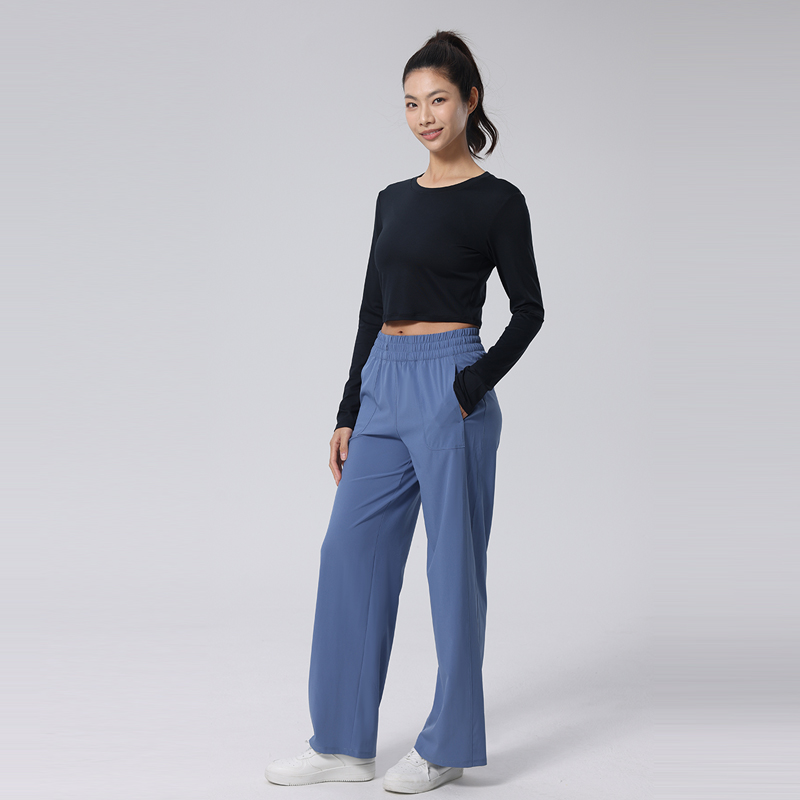
Core Technical Capabilities in Custom Activewear OEM Manufacturing
Seamless Knitting and Rapid 3D Sampling for Accelerated Time-to-Market
Leading custom activewear OEM partners use seamless knitting technology to produce entire garments with minimal stitching—eliminating side seams, reducing chafing, and delivering a precision body-hugging fit unattainable through traditional cut-and-sew. Modern 3D knitting machines execute fully digitized designs, enabling production to begin within hours of final approval. The true time-to-market advantage lies in rapid 3D sampling: virtual prototypes accurately simulate drape, stretch, compression, and movement, cutting physical sample iterations from weeks to days. A single digital file supports real-time collaboration across global design, sourcing, and production teams—replacing weeks of back-and-forth physical sample shipping. As a result, many custom activewear programs now move from concept to first shipment in under six weeks—down from the industry-standard 12-week cycle. This agility also enables on-demand manufacturing, lowering inventory risk and supporting smaller, trend-responsive production runs. For brands competing in fast-moving performance categories, seamless knitting and 3D sampling are no longer differentiators—they’re baseline requirements.
Performance Fabric Innovation: Moisture-Wicking, Lightweight & Recycled Polyester
Performance fabrics define functional custom activewear—and today’s leading OEMs control the full fabric ecosystem, from recycled yarn sourcing to finish application. Moisture-wicking finishes draw sweat away from the skin and accelerate evaporation, while ultra-lightweight polyester constructions (often under 100 g/m²) deliver a “barely-there” feel without sacrificing durability. Critically, these fabrics increasingly use mechanically or chemically recycled polyester derived from post-consumer bottles—now engineered to match virgin polyester in strength, colorfastness, and wicking performance. Leading facilities validate fabric performance against internal standards for air permeability, quick-dry time, stretch recovery, and UPF 50+ protection—all integrated at the yarn stage. Some OEMs offer custom development: blending recycled polyester with elastane for targeted compression, embedding anti-odor silver-ion treatments, or engineering dual-knit structures for zoned breathability. By vertically integrating fabric innovation, OEM partners help brands deliver technically rigorous, sustainable activewear that meets both athlete expectations and eco-conscious consumer values—without trade-offs.
Smart Fabric Integration and Wearable Tech Readiness in Custom Activewear
Smart textile integration is evolving from prototype novelty to scalable production capability. Conductive yarns—now fine enough for standard knitting and weaving—can be woven directly into compression panels to capture biometric data (heart rate, respiration, muscle activation) without external hardware. OEM factories with wearable tech readiness maintain clean-room environments for electronics handling, conduct wash-and-wear resistance testing, and deploy proprietary bonding methods to attach flexible sensor modules without compromising stretch, comfort, or durability. This eliminates months of iterative prototyping typically required for tech-enabled apparel. Beyond fitness tracking, smart fabrics support haptic coaching feedback and dynamic thermal regulation via embedded micro-heating elements. As the performance wearable market matures, manufacturers who bridge textile engineering and electronics assembly enable brands to transform activewear from passive apparel into active data-collection tools—creating new service-based revenue models and deepening consumer engagement.
Global Supply Chain Strategy for Custom Activewear OEM Partnerships
Asia-Pacific Manufacturing: Scalable, Export-Ready Capacity with ISO-Certified Quality Control
Asia-Pacific remains the engine of global custom activewear OEM production—particularly Vietnam, where activewear exports rose 15% year-over-year in 2023, supported by duty-free access under CPTPP and EVFTA trade agreements (Vietnam Textile & Apparel Association, 2024). Top-tier partners operate ISO 9001-certified quality management systems, ensuring consistency in seam strength, colorfastness, and dimensional stability across high-volume runs. Their advanced facilities handle complex technical constructions—including bonded seams, graduated compression panels, and multi-layer moisture-wicking laminates—with export-ready capacity exceeding 500,000 units per month. Low MOQs (300–500 pieces per style) empower emerging brands to test markets with minimal capital risk. Rigorous in-line and final random inspections (AQL 2.5/4.0) keep defect rates below 1.2%, safeguarding brand reputation while maintaining reliable 4–6 week lead times from approved sample to shipment.
US-Based OEM Facilities: Nearshoring Advantages for Speed, Compliance, and Responsiveness
US-based OEM facilities provide strategic nearshoring advantages for brands prioritizing speed, regulatory certainty, and design responsiveness. Domestic production cuts lead times by up to 40% versus trans-Pacific logistics—enabling repeat orders in as little as 2–3 weeks (Fashiondex, 2023). This agility supports weekly replenishment for top-selling styles and rapid iteration of seasonal capsule collections. US operations also simplify compliance with CPSIA, Prop 65, and FTC labeling mandates—reducing border delays and legal exposure. For high-mix, low-volume direct-to-consumer programs, local 4-needle flatlock and ultrasonic bonding equipment allows durable small-batch production (50–200 units) without compromising seam integrity. Though unit costs run 20–30% higher than Asian benchmarks, total cost of ownership often favors domestic manufacturing when factoring in freight, tariff volatility, duty drawbacks, and working capital tied up in overseas inventory. A hybrid model—bulk offshore production paired with responsive domestic short runs—delivers both scale and strategic flexibility.
Strategic Differentiation Through Custom Activewear OEM and ODM Collaboration
From Generic Production to Brand-Aligned Design Partnership: How Top Labels Leverage White-Label OEM Expertise
Forward-thinking brands treat OEM manufacturing not as transactional sourcing—but as embedded product development. In custom activewear, top labels co-create with OEM partners from the earliest stages: sharing innovation briefs, ergonomic research, and brand-specific tech packs to integrate proprietary material formulations, anatomically mapped compression zones, and signature aesthetic details directly into the production process. This collaborative model enables exclusive features—like antimicrobial liner integration or adaptive waistband construction—without requiring capital investment in R&D or infrastructure. The outcome is a white-label foundation transformed into a differentiated, brand-owned collection: technically precise, commercially distinct, and emotionally resonant with loyal consumers.
Navigating the OEM Paradox: Balancing Shared Capabilities with Unique Brand Identity
Because OEM facilities serve multiple clients, brands must proactively safeguard differentiation. Contractual exclusivity on colorways, trims, or finishing techniques prevents visual convergence. Proprietary tooling—such as custom-knit waistbands, laser-cut ventilation patterns, or unique seam tape applications—creates physical barriers to replication. Time-limited exclusivity clauses on newly developed performance fabrics (e.g., seasonally locked access to a novel recycled-elastane blend) further secure competitive advantage. These measures ensure shared manufacturing capacity becomes an enabler—not a diluter—of brand identity, allowing brands to leverage OEM scale while retaining unmistakable market positioning.
FAQ
What is seamless knitting technology in activewear OEM manufacturing?
Seamless knitting technology allows manufacturers to create entire garments with minimal stitching, enhancing comfort, reducing chafing, and improving fit compared to traditional cut-and-sew methods.
How does rapid 3D sampling accelerate activewear production?
Rapid 3D sampling uses virtual prototypes to simulate fabric behavior, reducing physical sample iterations from weeks to days and enabling faster collaboration between design and production teams.
What are the advantages of recycled polyester in performance fabrics?
Recycled polyester matches virgin polyester in terms of strength and performance while aligning with sustainable production practices, which appeal to eco-conscious consumers.
How are smart fabrics integrated into activewear?
Smart fabrics use conductive yarns and embedded sensors to capture biometric data or provide haptic feedback, transforming activewear into wearable tech-enabled tools.
What are the benefits of Asia-Pacific and US-based OEM manufacturing?
Asia-Pacific facilities offer scalability and cost efficiency, while US-based operations provide quicker lead times, compliance advantages, and responsiveness for smaller production runs.
Table of Contents
- Core Technical Capabilities in Custom Activewear OEM Manufacturing
- Global Supply Chain Strategy for Custom Activewear OEM Partnerships
- Strategic Differentiation Through Custom Activewear OEM and ODM Collaboration
-
FAQ
- What is seamless knitting technology in activewear OEM manufacturing?
- How does rapid 3D sampling accelerate activewear production?
- What are the advantages of recycled polyester in performance fabrics?
- How are smart fabrics integrated into activewear?
- What are the benefits of Asia-Pacific and US-based OEM manufacturing?