

 EN
EN
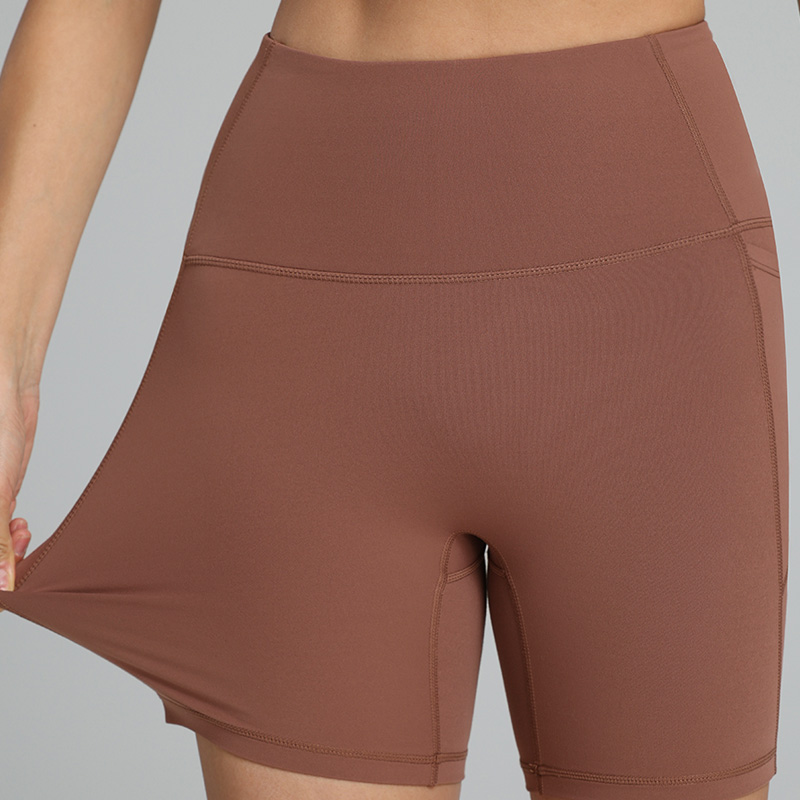
How Seamless Leggings Are Engineered: Circular Knitting and Precision Manufacturing
Seamless leggings are engineered through advanced circular knitting technology that eliminates traditional seams and stress points. This digital-first process creates garments as continuous, body-shaped tubes—enhancing comfort, performance, and anatomical fit without compromising durability or aesthetic precision.
Circular Knitting Technology: Enabling True Seamless Construction Without Seams or Stress Points
Circular knitting machines—often Santoni-style—form each legging as a single, continuous tube directly from yarns, bypassing the cut-and-sew process entirely. Hundreds of rotating needles adjust stitch type and tension in real time, shaping the waistband, hips, legs, and ankle openings sequentially within one uninterrupted cycle. This integrated construction removes side seams, significantly reducing friction and chafing during movement. Designers embed functional zones—like ribbed compression panels or laser-cut mesh ventilation—directly into the knit structure, aligning support with biomechanical demand. Because the process is digitally programmed and tightly controlled, every pair delivers consistent fit, recovery, and second-skin drape across production runs.
Critical Precision Metrics: Stitch Density, Tension Uniformity, and Gauge Consistency in Seamless Leggings Production
Three interdependent metrics define manufacturing excellence in seamless leggings: stitch density, tension uniformity, and gauge consistency. Stitch density governs yarn packing and directly affects compression, opacity, and surface texture. Tension uniformity ensures balanced stretch and recovery across all zones—preventing sagging, torque, or distortion after repeated wear. Gauge consistency—the number of needles per inch—determines fabric thickness, hand feel, and visual transparency. When calibrated together, these parameters enable precise replication of fit, shape retention, and performance across batches. Rigorous in-line monitoring during knitting mitigates weak spots and irregular elongation—issues endemic to traditional assembly methods—and ensures OEM partners meet stringent standards for athletic integrity and long-term wearability.
OEM Size Customization: From Inclusive Sizing to Body-Mapped Fit for Seamless Leggings
Beyond Standard Sizing: Full-Range Inclusive Grading and Anthropometric Data Integration
True size inclusivity begins with moving past generic S–XL charts. Leading OEMs deploy full-range inclusive grading systems built on dedicated pattern blocks for petite, tall, and curvy proportions—grounded in anthropometric data from thousands of 3D body scans. This approach yields size matrices that reflect real-world diversity, reducing returns by up to 35% while expanding market access. The next frontier is body-mapped fit: using 3D virtual fit simulations to fine-tune localized tension across the waistband, hips, and thighs—even within a single size. This eliminates vanity sizing and delivers consistent support and comfort across sizes 4–24. For performance brands, integrating compression mapping data ensures targeted biomechanical support without restricting natural range of motion.
Color and Fabric Customization: Elevating Brand Identity in Seamless Leggings
Pantone-Accurate Dyeing, Eco-Dye Options, and Batch-to-Batch Color Consistency
Precise color fidelity is essential for brand equity—and seamless leggings demand exceptional batch-to-batch consistency. Top-tier manufacturers achieve ≤ 0.5 Delta E deviation (per Textile Color Institute 2023) using spectrophotometer verification at three critical checkpoints: pre-dye, post-dye, and final inspection. This level of control enables complex ombré gradients and signature hues without banding or mismatched sets. Sustainable dye options now represent 38% of the market, with GOTS-certified organic pigments and closed-loop water systems cutting environmental impact by 65% versus conventional dyeing.
Performance Fabric Selection: Nylon-Spandex Ratios, Compression Levels, and Moisture-Wicking Standards
Fabric engineering defines the functional foundation of seamless leggings. Optimal nylon-spandex ratios balance durability, elasticity, and recovery:
| Ratio | Compression Level | Best For |
|---|---|---|
| 85:15 | Light (15–20 mmHg) | Yoga, lounging |
| 78:22 | Medium (20–25 mmHg) | Training, daily wear |
| 72:28 | High (25–30 mmHg) | Performance athletics |
Advanced moisture management leverages yarn-channeling architecture to accelerate wicking speed by 40% over standard knits. Thermoregulating variants maintain stable performance across ambient temperatures and achieve 98% evaporative drying efficiency within 8 minutes (AATCC Test Method 201)—ensuring seamless leggings deliver both aesthetic cohesion and measurable biomechanical benefit.
Streamlining OEM Collaboration: From Tech Pack to Production for Seamless Leggings
A precise tech pack is the non-negotiable foundation of successful OEM collaboration. It must include: detailed measurement sheets with ±2mm tolerances; a bill of materials specifying fabric composition, Pantone codes, thread types, and seam reinforcement requirements; and technical specifications for stitch density, gauge, and compression mapping. Providing this documentation upfront reduces sampling errors by over 40% and prevents costly rework. Factories use the tech pack to assess production feasibility, produce a structural fit sample, and finalize a salesman sample for approval. Clear, stage-gated communication—from tech pack submission through production launch—ensures your seamless leggings meet exact standards for size integrity, compression performance, and visual brand alignment—on time and at scale.
FAQ
What is circular knitting technology?
Circular knitting technology is a method where seamless leggings are created as one continuous tube, eliminating traditional seams and stress points, enhancing comfort and fit.
What materials are optimal for seamless leggings?
The best materials are nylon-spandex blends, like 85:15 for lighter compression or 72:28 for high-performance activities, depending on the desired level of compression and activity type.
How do manufacturers ensure color consistency in seamless leggings?
Manufacturers use precise dyeing processes and spectrophotometer verification at critical checkpoints to achieve consistent color fidelity.
What is a tech pack, and why is it important?
A tech pack is a detailed document containing specifications for fabric composition, measurements, and stitch details. It ensures a smooth OEM collaboration and reduces errors in production.
Table of Contents
- How Seamless Leggings Are Engineered: Circular Knitting and Precision Manufacturing
- OEM Size Customization: From Inclusive Sizing to Body-Mapped Fit for Seamless Leggings
- Color and Fabric Customization: Elevating Brand Identity in Seamless Leggings
- Streamlining OEM Collaboration: From Tech Pack to Production for Seamless Leggings
- FAQ