

 EN
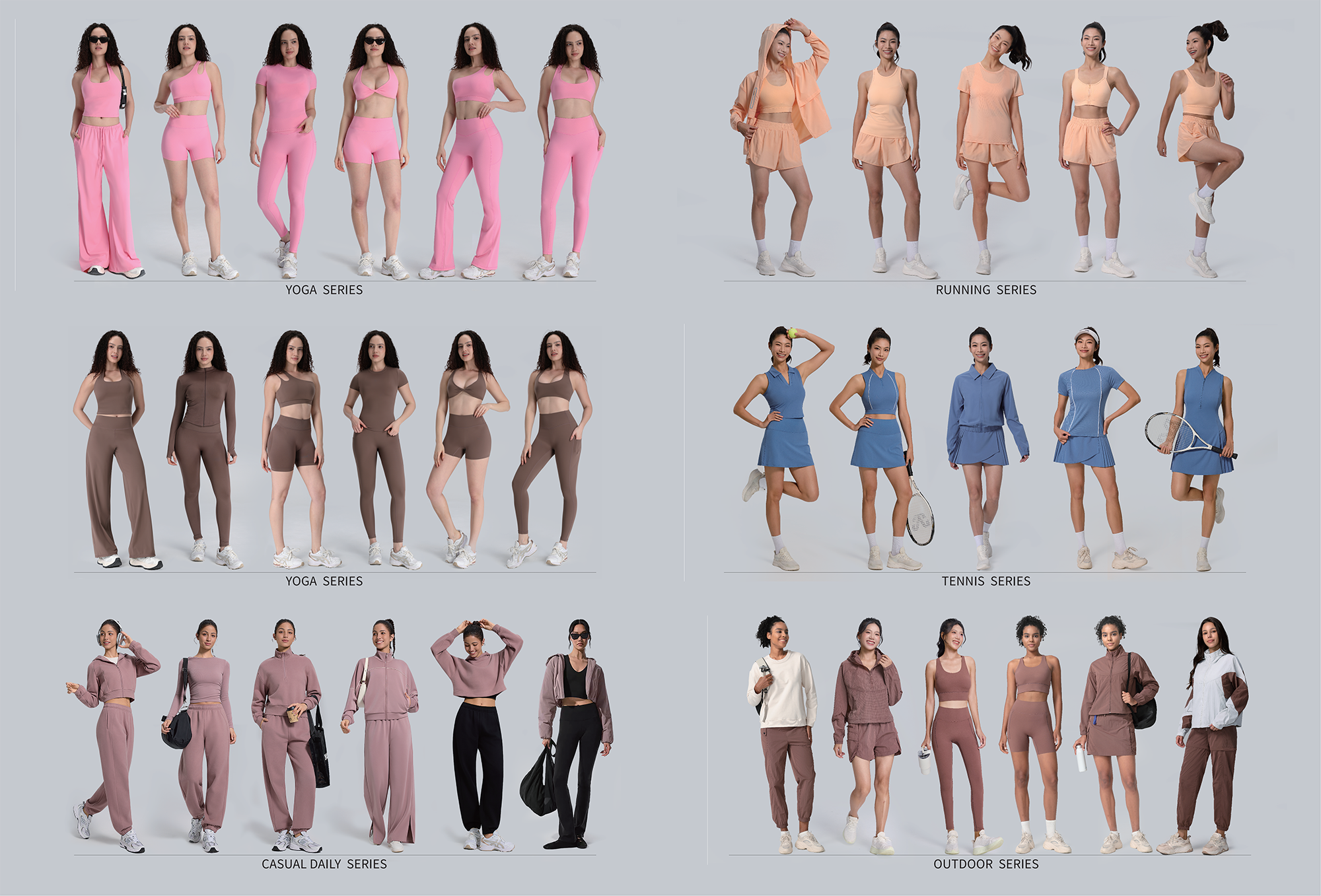
The Market Imperative: Why Small Batch Production Is Now Essential for Sportswear Brands
Consumer expectations in sportswear have shifted dramatically. A 2022 McKinsey report found that over 60% of shoppers now prioritize sustainability—driving brands to minimize overproduction waste. At the same time, the rise of personalized athleisure and micro-trends means forecast-driven, high-volume models often leave brands stuck with unsold inventory. Small batch production empowers emerging and scaling labels to test new designs, respond to real-time feedback, and launch targeted collections without massive capital risk. Experienced sportswear clothing manufacturers make this possible by combining agile workflows with low-minimum-order-quantity (MOQ) fabrics and trims.
The market is also rewarding niche, direct-to-consumer brands that offer exclusivity. These agile players are steadily gaining share from traditional giants by delivering fresh drops every few weeks—not just seasonal lines. For them, small batch manufacturing isn’t a fallback—it’s a strategic edge. Factories benefit too: on-demand production yields higher per-unit margins than high-volume, low-margin orders. In a global sportswear market projected to exceed $450 billion by 2028 (Statista), the brands that thrive will be those leveraging small batch capabilities to stay nimble, reduce waste, and align with conscious consumers.
How Experienced Sportswear Clothing Manufacturers Deliver Scalable Small Batch Capabilities
To unlock the agility modern retail demands, leading sportswear clothing manufacturers fuse two operational pillars: digitally-driven development and flexible, low-barrier supply networks. These intertwined strategies dissolve the traditional volume constraints that once locked emerging brands out of performance apparel production.
Lean Digital Workflows: Rapid Pattern-Making and Virtual Sampling
Digitalization has reinvented pre-production. 3D simulation software now lets brands review fit, drape, and color combinations in hours—not weeks—while cloud-based platforms enable instant, cross-time-zone collaboration. Embedding digital prototyping within iterative feedback loops slashes material waste by 30% and typically collapses three physical sampling rounds into one. Pattern-making software automatically nests markers for optimal fabric yield, and a manufacturer’s digital database of trusted blocks accelerates new-style creation. Once a tech pack is uploaded, the technical team can generate ready-for-review patterns within 24 hours and deliver a virtual sample for approval the same day. This synchronized workflow enables same-week physical proto-sample turnaround—cutting overall design-to-market timelines by as much as 60%.
Agile Sourcing Ecosystems: Low-MOQ Fabrics, Local Trims, and On-Demand Dyeing
Seasoned manufacturers avoid rigid bulk purchasing by building responsive supply webs. They partner with mills offering high-performance greige fabrics at minimums as low as 100 meters—so even start-ups can test moisture-wicking or compression materials without over-committing. Proximity to local trim houses further shrinks lead times: zippers, elastics, and drawstrings are sourced in quantities matching the final order, eliminating component-level MOQ friction. Meanwhile, on-demand dyeing services transform stock textile into precise Pantone shades within three to five days—enabling micro-drops and rapid colorway pivots. Digital printing adds another agile layer, permitting intricate graphics on orders of just a few dozen pieces. This ecosystem reduces inventory risk, supports seasonal capsules of 50 units or fewer, and can deliver a full run of performance leggings from concept to completion in under three weeks.
Proven Impact: Real-World Success from Launch to Retail Expansion
Case Study: DTC Running Brand’s Growth Trajectory with a Single Manufacturer Partner
A DTC running brand launched with just three performance-focused designs—and needed sportswear clothing manufacturers capable of delivering 100–200 units per style without inflated per-piece costs. They selected a partner that combined lean digital prototyping with a low-MOQ fabric network. Digital patterns were finalized and first samples produced in five days, compressing the entire pre-launch timeline to under six weeks. Initial inventory—180 units per SKU—sold out in 48 hours through organic social traffic, confirming strong product-market fit. As orders surged, the manufacturer scaled monthly output from 300 to 3,000 pieces while maintaining stitch-level consistency and on-time delivery—critical for meeting retail buyer deadlines. Within 18 months, the brand grew to 12 SKUs and secured shelf space in two specialty multi-brand retailers. The manufacturer provided weekly capacity updates, enabling confident commitment to retailer promotional schedules. This end-to-end support—from first sample to steady wholesale fulfillment—demonstrates how a single, reliable manufacturing partner can turn a micro-launch into sustainable retail expansion.
What to Evaluate: Key Selection Criteria for Reliable Sportswear Clothing Manufacturers
Certifications, Transparent Capacity Reporting, and Prototype Turnaround Benchmarks
Evaluating potential sportswear clothing manufacturers demands a clear focus on verifiable credentials and operational transparency. Start by requiring recognized certifications like BSCI or WRAP to confirm ethical labor conditions and consistent quality controls. Next, insist on transparent capacity reporting—partners must openly share real-time production line loads to prevent overbooking and missed deadlines. Finally, test responsiveness with prototype turnaround benchmarks: a manufacturer able to deliver an accurate, sewn sample within seven business days signals lean digital workflows and serious commitment to agile small-batch production. Together, these three criteria create a reliable foundation for scaling your sportswear line—without sacrificing speed or integrity.
FAQs About Small Batch Production in Sportswear
Why is small batch production crucial for sportswear brands?
Small batch production minimizes overproduction waste, allows brands to test designs and respond to feedback, and supports niche collections with low capital risks.
What technologies help in small batch production?
Technologies such as 3D simulation software, cloud-based collaboration platforms, and digital pattern-making tools streamline development and production timelines.
How do manufacturers support agility in small batch production?
Manufacturers partner with suppliers offering low-MOQ fabrics, use on-demand dyeing services for flexible colorways, and rely on local sourcing to reduce lead times.
What certifications should I look for in sportswear manufacturers?
Look for certifications like BSCI or WRAP to ensure ethical practices and consistent quality controls.
Can small batch production support rapid growth?
Yes, brands can start with small launches and scale up based on demand while maintaining quality and timely delivery.
Table of Contents
- The Market Imperative: Why Small Batch Production Is Now Essential for Sportswear Brands
- How Experienced Sportswear Clothing Manufacturers Deliver Scalable Small Batch Capabilities
- Proven Impact: Real-World Success from Launch to Retail Expansion
- What to Evaluate: Key Selection Criteria for Reliable Sportswear Clothing Manufacturers
- FAQs About Small Batch Production in Sportswear